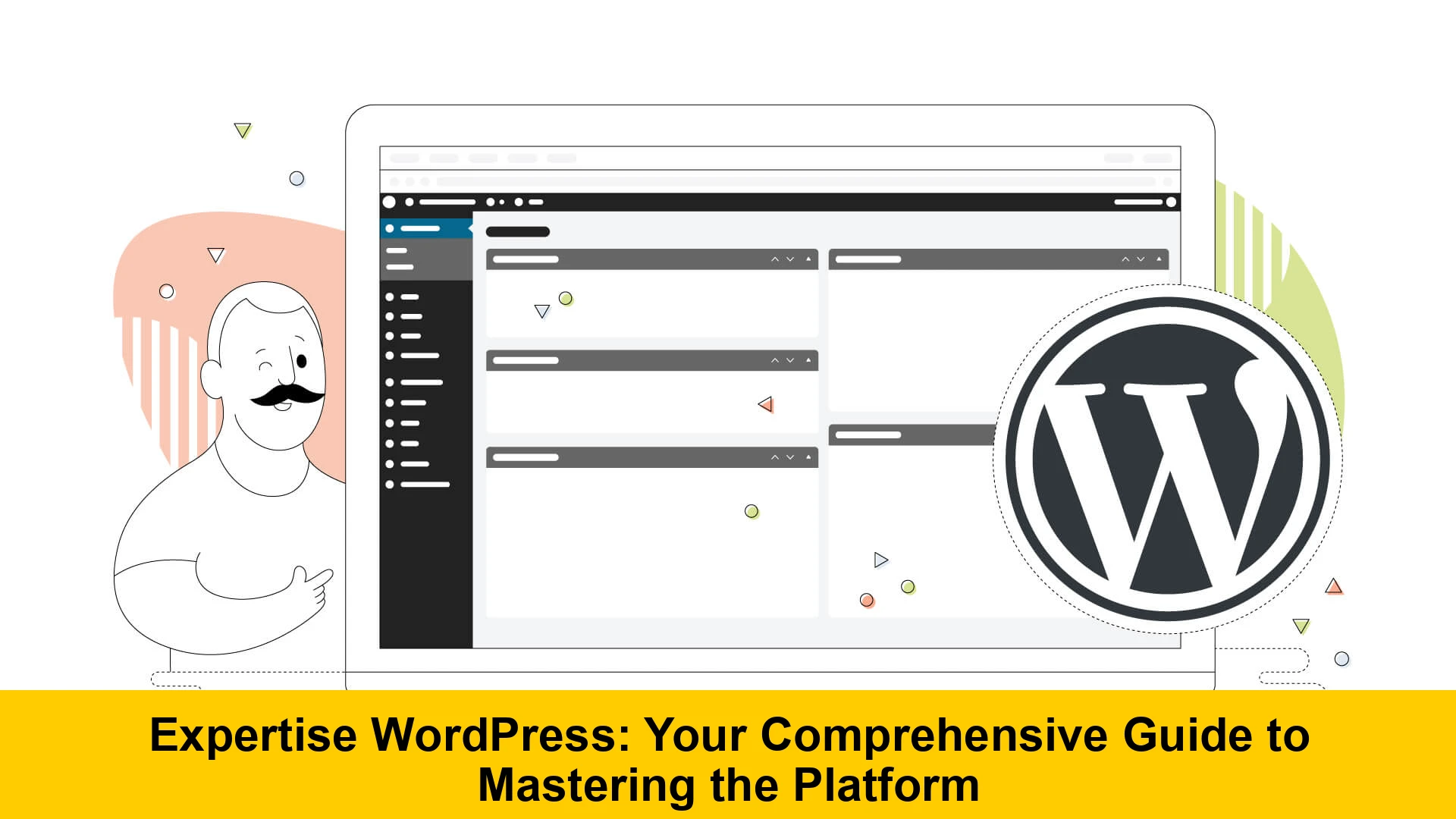
In the vast and ever-expanding ocean of digital presence, WordPress stands as a colossal island, powering over 43% of all websites on the internet. From personal blogs to e-commerce giants and corporate portals, its versatility is unmatched. While many can install a theme or add a plugin, true expertise WordPress goes far beyond these basic actions. It’s about understanding the platform inside out, being able to customize it to meet any unique requirement, optimize its performance, and secure it against threats. This comprehensive guide is meticulously designed to illuminate the path to achieving deep WordPress knowledge, transforming you from a casual user into a highly skilled professional. Whether you aspire to be a freelance developer, an agency specialist, a theme or plugin creator, or simply want to elevate your own site, developing robust WordPress skills is an invaluable journey. We’ll explore the foundational elements, delve into advanced development techniques, discuss crucial soft skills, and show you how to demonstrate and leverage your hard-earned expertise.
What Does “WordPress Expertise” Truly Mean?
To truly achieve WordPress expertise, one must move beyond the surface-level understanding of the admin dashboard. It’s not just about knowing how to create a post or change a theme; it’s about grasping the underlying architecture, best practices, and the vast ecosystem that makes WordPress so powerful. A WordPress expert possesses the ability to diagnose complex issues, architect scalable solutions, develop custom functionalities, and maintain a site’s health, security, and performance. This holistic understanding involves technical prowess, problem-solving capabilities, and a keen eye for detail. It’s the difference between merely using a tool and truly mastering it, allowing you to adapt, innovate, and contribute meaningfully to the WordPress community and its users. The journey to mastering WordPress proficiency is continuous, requiring dedication to lifelong learning and adapting to new updates and trends.
Building Your Foundation: The Core Pillars of WordPress Knowledge
Before you can truly develop WordPress knowledge, you need to establish a rock-solid understanding of its fundamental components. Think of this as laying the groundwork for a skyscraper; without it, nothing else can stand.
Understanding the WordPress Ecosystem and Dashboard
- Dashboard Navigation: Familiarize yourself with every section: Posts, Pages, Media, Comments, Appearance, Plugins, Users, Tools, and Settings. Understand their purpose and how they interact.
- Posts vs. Pages: Differentiate between dynamic, chronological blog posts and static, hierarchical pages.
- Media Library: Learn best practices for image optimization, video embedding, and media organization.
- User Roles and Permissions: Grasp the different user roles (Administrator, Editor, Author, Contributor, Subscriber) and how to assign appropriate permissions for security and workflow.
Themes and Plugins: The Extensibility Backbone
Themes control the visual design and layout, while plugins add functionality. A significant part of gaining WordPress skills lies in understanding how to leverage these effectively and responsibly.
- Theme Selection: Learn to identify well-coded, responsive, and secure themes from reputable sources. Understand the difference between free and premium themes.
- Plugin Management: Master the art of selecting, installing, configuring, and updating plugins. Crucially, learn how to audit plugins for performance impacts and potential security vulnerabilities. Knowing when not to install a plugin is as important as knowing when to.
- Child Themes: This is a critical concept for anyone serious about customization. A child theme inherits the functionality and styling of another theme (the parent theme), allowing you to modify it without altering the parent theme’s code. This ensures your customizations are not lost when the parent theme updates.
The WordPress Database: A Glimpse Under the Hood
While WordPress abstracts much of the database interaction, a basic understanding of its structure is invaluable for debugging and advanced development. Know that WordPress uses MySQL and stores posts, pages, comments, users, and settings in various tables. You don’t need to be a SQL expert, but understanding that your data lives in a database and how it’s organized is crucial for deep problem-solving.
The Technical Pillar: Essential Development Skills for Advanced WordPress Techniques
To truly achieve an expert level in WordPress, you must delve into the code that powers it. This involves understanding core web technologies that WordPress relies upon. This is the path to WordPress expertise that transforms a user into a developer.
HTML: Structuring Content
HyperText Markup Language (HTML) is the foundation of all web pages. WordPress generates HTML, and to effectively customize or troubleshoot, you need to understand its elements, attributes, and semantic structure.
<div id="custom-wrapper">
    <h1>Welcome to My Custom WordPress Section</h1>
    <p>This is a paragraph of content within our custom HTML.</p>
    <ul>
        <li>Item One</li>
        <li>Item Two</li>
    </ul>
</div>
Explanation: This simple HTML snippet shows how content is structured. Understanding tags like <div>, <h1>, <p>, and <ul> is fundamental for manipulating content output in WordPress themes and plugins.
CSS: Styling Your WordPress Site
Cascading Style Sheets (CSS) dictates the visual presentation of HTML. Mastering CSS is vital for creating beautiful, responsive, and consistent designs within WordPress. This includes understanding selectors, properties, values, and the box model, as well as responsive design principles using media queries.
/ Custom styles for our WordPress expertise guide /

#custom-wrapper {
    background-color: #f9f9f9;
    border: 1px solid #ddd;
    padding: 20px;
    margin-bottom: 30px;
    border-radius: 8px;
}

#custom-wrapper h1 {
    color: #333;
    font-size: 2.2em;
    margin-bottom: 15px;
}

#custom-wrapper p {
    line-height: 1.6;
    color: #555;
}

@media (max-width: 768px) {
    #custom-wrapper {
        padding: 15px;
    }
    #custom-wrapper h1 {
        font-size: 1.8em;
    }
}
Explanation: This CSS targets the HTML structure above, providing styling for the wrapper, heading, and paragraph. The media query demonstrates how to make styles responsive for smaller screens, a key aspect of modern web design and a necessary skill for a professional WordPress development career.
PHP: The Heart of WordPress
WordPress is written primarily in PHP. To truly excel, you need a solid understanding of PHP fundamentals, including variables, data types, control structures (if/else, loops), functions, and object-oriented programming (OOP) concepts. Key WordPress-specific PHP knowledge includes:
- The WordPress Loop: How WordPress retrieves and displays posts.
- Template Hierarchy: Understanding which template file WordPress loads for a given request (e.g.,
single.php,page.php,archive.php). - WordPress Functions: Familiarity with common functions like
get_header(),the_title(),wp_enqueue_script(), andregister_post_type().
JavaScript & jQuery: Adding Interactivity
For dynamic and interactive elements on your WordPress site, JavaScript (often with its popular library jQuery) is essential. Skills include manipulating the DOM, handling events, and making AJAX requests.
// Simple JavaScript to toggle a class on a button click
document.addEventListener('DOMContentLoaded', function() {
    const toggleButton = document.getElementById('myToggleButton');
    const targetElement = document.getElementById('targetContent');

    if (toggleButton && targetElement) {
        toggleButton.addEventListener('click', function() {
            targetElement.classList.toggle('is-hidden');
            if (targetElement.classList.contains('is-hidden')) {
                toggleButton.textContent = 'Show Content';
            } else {
                toggleButton.textContent = 'Hide Content';
            }
        });
    }
});
Explanation: This JavaScript code listens for a click on a button and toggles a CSS class on another element, changing its visibility and updating the button’s text. This demonstrates basic interactivity often used in sliders, tabs, or accordions.
Diving Deep: Theme and Plugin Development for Achieving WordPress Expert Level
This is where your WordPress development skills truly shine. Moving beyond mere customization to creating bespoke solutions is a hallmark of an expert.
Mastering Child Themes: The Foundation of Safe Customization
As mentioned, child themes are non-negotiable. They allow you to safely modify existing themes. You’ll learn to override template files, add custom functions, and enqueue custom stylesheets and scripts without touching the parent theme. This is foundational for any WordPress specialist.
Custom Post Types (CPTs) and Taxonomies: Organizing Content Beyond Posts and Pages
WordPress isn’t just for blogs. CPTs allow you to create entirely new content types (e.g., ‘Books’, ‘Products’, ‘Events’), each with its own fields and display logic. Taxonomies (like categories and tags, but custom) help organize these CPTs.
function create_custom_portfolio_post_type() {
    $labels = array(
        'name'                  => _x( 'Portfolio Items', 'Post Type General Name', 'your-textdomain' ),
        'singular_name'         => _x( 'Portfolio Item', 'Post Type Singular Name', 'your-textdomain' ),
        'menu_name'             => __( 'Portfolio', 'your-textdomain' ),
        'name_admin_bar'        => __( 'Portfolio Item', 'your-textdomain' ),
        'archives'              => __( 'Portfolio Archives', 'your-textdomain' ),
        'attributes'            => __( 'Portfolio Attributes', 'your-textdomain' ),
        'parent_item_colon'     => __( 'Parent Item:', 'your-textdomain' ),
        'all_items'             => __( 'All Portfolio Items', 'your-textdomain' ),
        'add_new_item'          => __( 'Add New Portfolio Item', 'your-textdomain' ),
        'add_new'               => __( 'Add New', 'your-textdomain' ),
        'new_item'              => __( 'New Portfolio Item', 'your-textdomain' ),
        'edit_item'             => __( 'Edit Portfolio Item', 'your-textdomain' ),
        'update_item'           => __( 'Update Portfolio Item', 'your-textdomain' ),
        'view_item'             => __( 'View Portfolio Item', 'your-textdomain' ),
        'view_items'            => __( 'View Portfolio Items', 'your-textdomain' ),
        'search_items'          => __( 'Search Portfolio Items', 'your-textdomain' ),
        'not_found'             => __( 'Not found', 'your-textdomain' ),
        'not_found_in_trash'    => __( 'Not found in Trash', 'your-textdomain' ),
        'featured_image'        => __( 'Featured Image', 'your-textdomain' ),
        'set_featured_image'    => __( 'Set featured image', 'your-textdomain' ),
        'remove_featured_image' => __( 'Remove featured image', 'your-textdomain' ),
        'use_featured_image'    => __( 'Use as featured image', 'your-textdomain' ),
        'insert_into_item'      => __( 'Insert into item', 'your-textdomain' ),
        'uploaded_to_this_item' => __( 'Uploaded to this item', 'your-textdomain' ),
        'items_list'            => __( 'Items list', 'your-textdomain' ),
        'items_list_navigation' => __( 'Items list navigation', 'your-textdomain' ),
        'filter_items_list'     => __( 'Filter items list', 'your-textdomain' ),
    );
    $args = array(
        'label'                 => __( 'Portfolio Item', 'your-textdomain' ),
        'description'           => __( 'Custom post type for portfolio projects.', 'your-textdomain' ),
        'labels'                => $labels,
        'supports'              => array( 'title', 'editor', 'thumbnail', 'excerpt', 'custom-fields' ),
        'hierarchical'          => false,
        'public'                => true,
        'show_ui'               => true,
        'show_in_menu'          => true,
        'menu_position'         => 5,
        'menu_icon'             => 'dashicons-portfolio',
        'show_in_admin_bar'     => true,
        'show_in_nav_menus'     => true,
        'can_export'            => true,
        'has_archive'           => true,
        'exclude_from_search'   => false,
        'publicly_queryable'    => true,
        'capability_type'       => 'post',
        'show_in_rest'          => true, // Enables it for the Gutenberg editor and REST API
    );
    register_post_type( 'portfolio', $args );
}
add_action( 'init', 'create_custom_portfolio_post_type' );
Explanation: This PHP code snippet, typically placed in a child theme’s functions.php file or a custom plugin, registers a new ‘Portfolio Item’ custom post type. It defines its labels, supported features (like title, editor, featured image), and various administrative settings. The 'show_in_rest' => true line is particularly important for compatibility with the Gutenberg editor and the WordPress REST API, demonstrating learning advanced WordPress coding and customization.
Custom Fields: Extending Data Entry
While CPTs give you new content types, custom fields allow you to add unique data points to any post, page, or CPT. Tools like Advanced Custom Fields (ACF) simplify this, but understanding the underlying API is crucial for true WordPress expertise.
WordPress Hooks (Actions & Filters): The Core of Extensibility
Hooks are WordPress’s way of allowing developers to interact with its core functionality without modifying core files. Actions allow you to run custom code at specific points in WordPress’s execution, while filters enable you to modify data before WordPress uses or displays it. Mastering hooks is paramount for developing deep WordPress technical understanding.
function custom_the_content_filter( $content ) {
    // Only apply the filter if it's a single post and not in the admin area
    if ( is_single() && ! is_admin() ) {
        $additional_text = '<p><strong>This content has been enhanced by our WordPress expertise!</strong></p>';
        $content .= $additional_text;
    }
    return $content;
}
add_filter( 'the_content', 'custom_the_content_filter' );
Explanation: This filter hook targets 'the_content', which is the main content of a post or page. It appends a custom paragraph to the end of the content, but only when viewing a single post on the front end. This is a simple yet powerful example of how filters allow you to alter output without directly editing templates.
WordPress REST API: Building Modern Applications
The REST API allows WordPress to communicate with external applications using standard HTTP requests. This opens doors for building headless WordPress sites (where WordPress is just the backend data source), mobile apps, or integrating with other services. Understanding how to query, create, and update data via the REST API is a hallmark of advanced WordPress techniques.
Optimizing and Securing Your WordPress Sites
A truly skilled WordPress professional doesn’t just build sites; they build robust, fast, and secure sites. This requires an understanding of optimization and security best practices.
Performance Optimization
- Caching: Implementing server-side, object, and page caching (e.g., using plugins like WP Super Cache or WP Rocket).
- Image Optimization: Compressing and resizing images, using next-gen formats (WebP).
- Minification and Concatenation: Reducing file sizes of CSS and JavaScript and combining them to reduce HTTP requests.
- Content Delivery Networks (CDNs): Distributing static assets geographically to speed up delivery.
- Database Optimization: Cleaning up old revisions, transients, and spam comments.
Security Best Practices
- Strong Passwords and User Permissions: Enforcing strong credentials and adhering to the principle of least privilege.
- Regular Updates: Keeping WordPress core, themes, and plugins updated to patch vulnerabilities.
- Security Plugins: Utilizing tools like Wordfence or Sucuri for firewalls, malware scanning, and login protection.
- Backups: Implementing a reliable, automated backup strategy (both file and database backups) with off-site storage.
- SSL Certificates: Ensuring all sites run over HTTPS for encrypted communication.
Troubleshooting and Debugging: Becoming a Problem Solver
Part of achieving WordPress expert level is the ability to efficiently identify and resolve issues. Sites will inevitably encounter problems, and knowing how to debug them is critical.
- Common Errors: Familiarize yourself with the white screen of death (WSOD), database connection errors, 404s, and memory limits.
- Debugging Tools:
WP_DEBUG: Enabling this constant inwp-config.phpto display PHP errors.- Browser Developer Tools: Inspecting HTML, CSS, JavaScript errors, and network requests.
- Query Monitor Plugin: An indispensable tool for developers to inspect database queries, PHP errors, hooks, and more.
- PHP Error Logs: Knowing how to access and interpret server-side error logs.
- Systematic Approach: Learning to deactivate plugins/themes methodically to isolate the cause of an issue.
Beyond Code: The Soft Skills of a WordPress Professional
Technical skills are vital, but for a successful WordPress career path, soft skills are equally important, especially if you aim to become a highly skilled WordPress professional working with clients or in a team.
Client Communication and Project Management
Clearly communicating technical concepts to non-technical clients, managing expectations, setting realistic deadlines, and providing regular updates are crucial for project success and client satisfaction.
Version Control (Git)
For any serious development, especially in a team environment, Git is indispensable. It allows you to track changes, collaborate effectively, and revert to previous versions if needed. Learning Git is a core step for professional WordPress development.
Continuous Learning and Community Engagement
WordPress is constantly evolving. Staying updated with core updates, new development paradigms (like Gutenberg blocks), security best practices, and emerging tools is non-negotiable. Engaging with the WordPress community through forums, meetups, and WordCamps is a fantastic way to learn and network. Learn WordPress.org provides excellent structured learning paths to enhance your skills continually.
Demonstrating Your WordPress Expertise
Once you’ve built your skills, it’s essential to showcase them effectively to prove your WordPress expertise.
Building a Powerful Portfolio
Your portfolio is your most valuable asset. Showcase real-world projects, highlighting the challenges you faced and the custom solutions you implemented. Provide case studies, before-and-after comparisons, and client testimonials. For creating a portfolio to showcase WordPress expertise, focus on custom development, performance optimization, and unique problem-solving.
Contributing to the WordPress Community
Contributing to WordPress core, translating themes/plugins, providing support in forums, or speaking at local meetups or WordCamps not only helps the community but also establishes you as an authority. Explore ways to contribute at Make WordPress Core.
Blogging and Sharing Knowledge
Writing tutorials or sharing your insights on a personal blog positions you as an expert and helps you refine your understanding. This is one of the best ways to acquire WordPress skills and knowledge by teaching them.
Certifications and Courses
While WordPress doesn’t have an official certification program, many reputable online platforms offer courses that can validate your skills and fill knowledge gaps. Look for courses from established educators or platforms that cover modern WordPress development. While not a formal credential, completing a comprehensive course can be a step towards certifications to prove WordPress expertise in a competitive market.
Leveraging Your Expertise: Career Paths for a WordPress Specialist
With genuine WordPress expertise, a multitude of career opportunities open up. Understanding what does WordPress expertise mean for freelancers and agencies can guide your career choices.
- Freelance WordPress Developer: Offer your services to clients directly, building custom sites, themes, or plugins.
- Agency WordPress Developer: Work within a team on larger, more complex projects for various clients.
- Theme/Plugin Developer: Create and sell your own themes and plugins on marketplaces or through your own platform.
- WordPress Support Specialist: Provide technical support, troubleshooting, and maintenance for WordPress users.
- WordPress Consultant: Advise businesses on their WordPress strategy, performance, and security.
- Content Creator/Instructor: Share your knowledge by writing for blogs, creating video tutorials, or teaching courses.
For those looking for a guide to building WordPress expertise from scratch, the journey can feel daunting, but each step outlined above builds upon the last, leading to a rewarding career as a highly skilled WordPress professional. Utilizing WordPress Developer Resources is an ongoing activity for any serious developer, providing authoritative documentation and guides.
Conclusion: Your Journey to WordPress Mastery
The journey to acquiring deep WordPress expertise is challenging yet incredibly rewarding. It demands continuous learning, hands-on practice, and a commitment to staying updated with the ever-evolving platform. By systematically building your foundational knowledge, diving deep into development, prioritizing performance and security, honing your troubleshooting skills, and cultivating crucial soft skills, you will pave your way to becoming a true WordPress master. Remember, the digital landscape is always changing, and your ability to adapt and innovate with WordPress will be your greatest asset. Embrace the learning process, engage with the vibrant community, and consistently apply your knowledge to real-world projects. The demand for skilled WordPress professionals is high, and with dedication, you can carve out a successful and impactful career. Start today, and begin your exciting journey to unparalleled WordPress proficiency!